
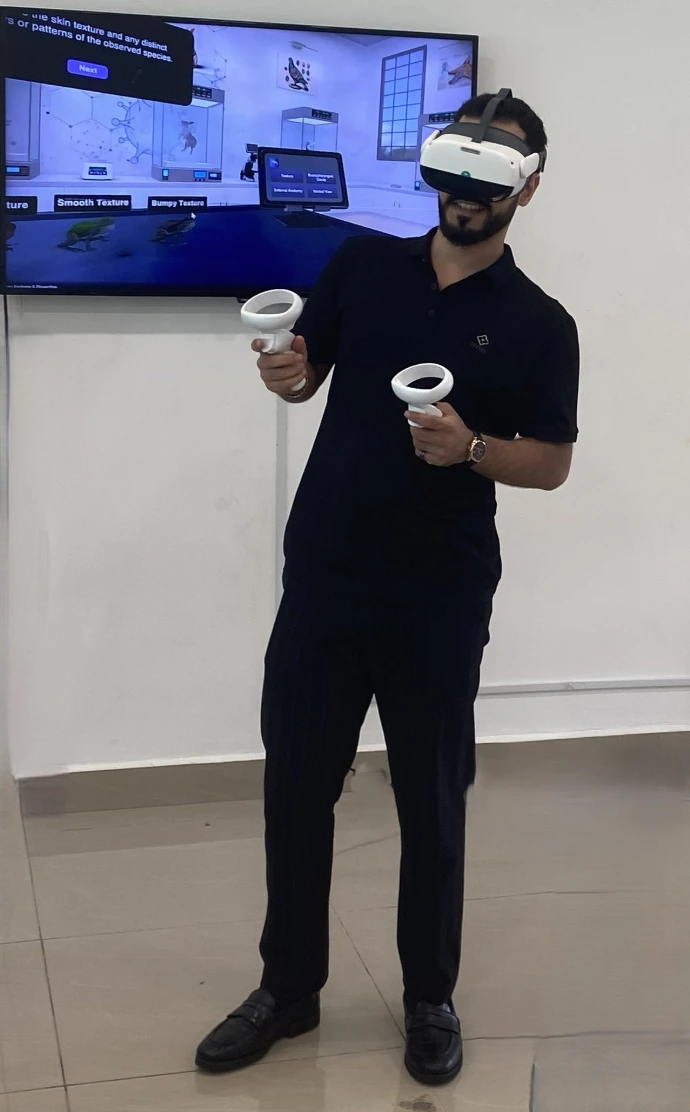
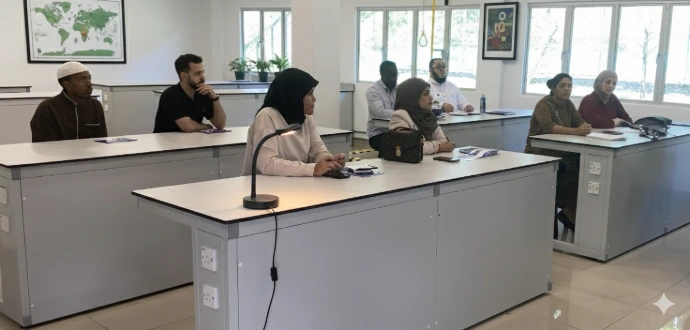
We recently witnessed an exciting demonstration of SciVR, a virtual reality (VR) platform designed to make learning more interactive and engaging. Teachers and school leaders explored how this technology can support lessons and help students better understand complex topics.
As education continues to evolve, we aim to provide tools that meet international standards and prepare students for the future. SciVR connects textbook learning with real-world experiences through three main features: Virtual STEM Labs, Expeditions XR, and Career Discovery.
A Curriculum-Focused Tool
SciVR is designed to support well-known international curricula, including:
• Cambridge International Curriculum – Supporting practical learning for IGCSE and A-Level subjects.
• US Standards (NGSS & Common Core) – Encouraging critical thinking and deeper understanding.
Teachers can match VR activities directly to their lesson plans, ensuring that technology enhances learning in a meaningful way.
What Students Can Experience
1. Virtual STEM Labs
Students can safely conduct science experiments in Physics, Chemistry, and Biology without the limitations of physical labs. They can explore space, observe planetary movements, and even perform virtual dissections.
2. Expeditions XR
Virtual field trips allow students to visit famous landmarks and historical sites around the world, making history and geography more engaging and memorable.
3. Career Discovery
Students can explore different career paths through interactive simulations, from technical trades to public safety and modern workplaces. This helps them discover their interests and future goals.
Supporting Teachers
SciVR also includes a classroom management dashboard. Teachers can monitor student progress, track engagement, and use data insights to provide better support.
Looking Ahead
The SciVR demonstration showed that immersive learning is not just a future idea—it is a practical tool that can enhance today’s classrooms and inspire tomorrow’s innovators.